Curating a Creative Legacy: Lessons from Early Portfolio Practice
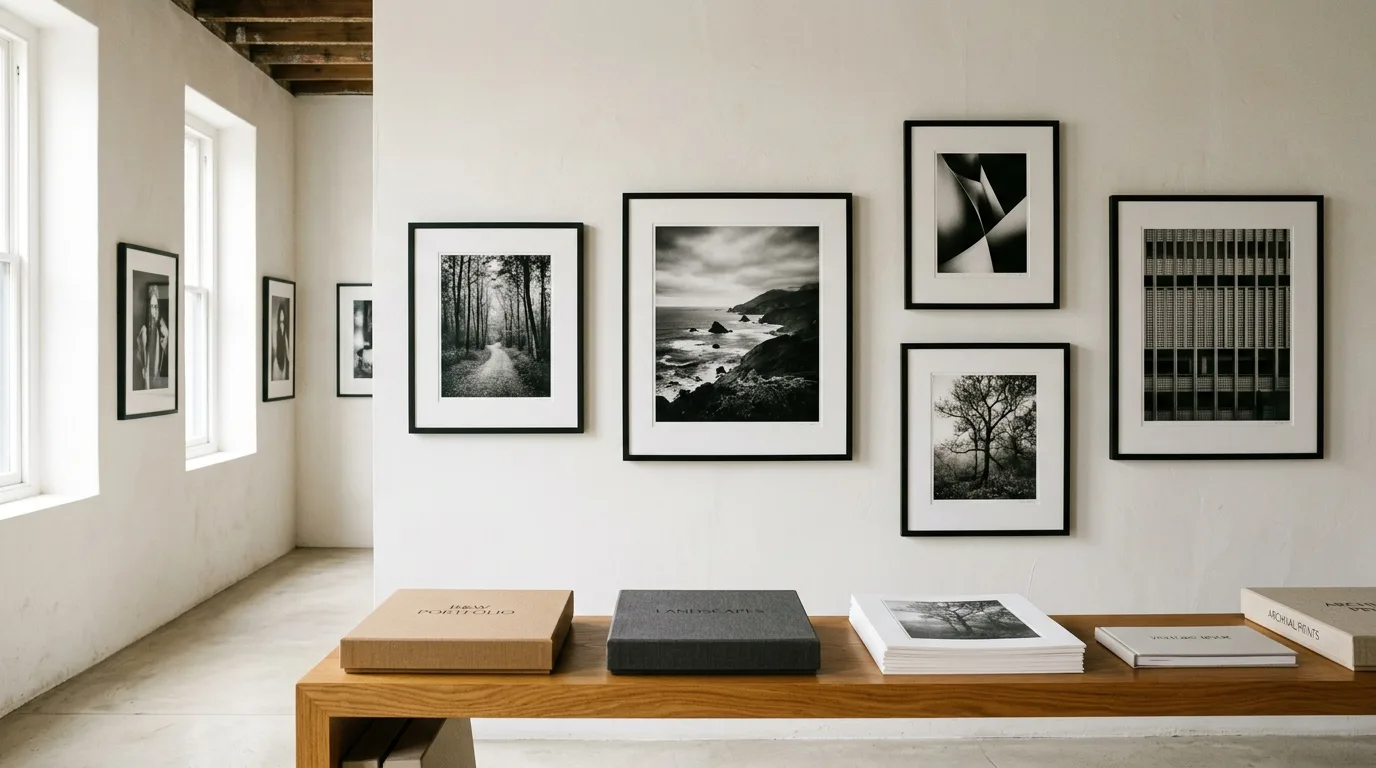
Curation is an act of argument. Every decision about what to include, what to exclude, and in what order to present work makes a claim about what the work means and what it is for. The artist who curates their own portfolio is doing something that goes beyond organizing files or building a website. They are constructing a narrative about their practice, positioning their work within a field, and making choices about which aspects of their development are legible and which are held back.
These decisions are consequential. The portfolio is often the primary way that new audiences encounter an artist’s work, and the frame it constructs shapes every encounter that follows. Getting the curation right (or close enough to right that it invites genuine engagement) is one of the most demanding and undervalued skills in artistic practice.
What a Portfolio Actually Does
A portfolio is not a neutral container. It does not simply display work; it argues for a particular understanding of that work. The sequence in which images are presented, the weight given to different series or projects, the visual relationships between works placed in proximity to each other: all of these are interpretive decisions with real consequences.
In the context of fine art photography and conceptual practice, the portfolio often needs to accomplish several things simultaneously. It needs to demonstrate technical and formal competence to viewers with professional interests: gallerists, curators, editorial clients. It needs to communicate a coherent sensibility to viewers who are encountering the artist for the first time and are forming first impressions quickly. And it needs to function as a record for the artist themselves, a document of where the practice has been and what it has produced.
These demands can pull in different directions. The work that most clearly demonstrates technical range may not be the work that most clearly communicates the artist’s central concerns. The project that feels most important to the artist may be the one that is hardest for a first-time viewer to enter. The curation process involves making principled choices about how to balance these competing pressures.
The Digital Portfolio as Exhibition Space
The emergence of the personal website as a primary venue for artistic presentation in the early 2010s represented a genuine shift in how visual artists could position and distribute their work. For the first time, an artist could construct a complete exhibition environment, with full control over sequencing, context, and the physical experience of navigation, without requiring access to institutional or gallery space.
This was a significant democratization, but it came with its own set of challenges. The conventions of gallery exhibition, developed over decades, provided clear frameworks for how work should be presented and encountered. The personal website offered radical freedom alongside radical ambiguity. What were the conventions for navigating a digital portfolio? How long would a visitor spend on any given page? What relationships between images were created by the architecture of a site as opposed to the architecture of a gallery wall?
Artists who navigated this period most effectively often treated their websites as conceptual objects in their own right, not merely as repositories for existing work but as environments designed to produce particular experiences of that work. The structure of the site, its visual language, its interface conventions were all understood as part of the artistic statement.
Selection and Restraint
One of the most common errors in portfolio curation is inclusion of too much work. The instinct to show everything is understandable: the artist has invested time and energy in each piece, and exclusion feels like a kind of abandonment. But a portfolio weighted down with work that does not represent the artist at their best dilutes the impact of the strongest pieces.
Restraint is curatorial argument. When an artist shows fifteen images instead of fifty, they are claiming that these fifteen images are sufficient to communicate what is essential about the practice. That claim will be tested by viewers, and if the selection is right, the test will be passed. The viewer who has encountered a carefully edited portfolio and been compelled by it will want to see more, will seek out other contexts in which the work appears, will begin to understand the portfolio as a threshold rather than a complete statement.
The question of how much to show is related to but distinct from the question of what to show. An artist might have a smaller body of work that requires showing everything to give a complete picture, or a large body of work from which a tight selection communicates more effectively than any broader sample could. Context (the career stage of the artist, the audience being addressed, the purpose of the particular portfolio iteration) determines the appropriate scope.
Sequencing as Argument
The order in which works appear in a portfolio is not incidental. Sequence creates expectation and then either fulfills or subverts it. The first image in a portfolio sets terms for everything that follows; the last image leaves the viewer with a final impression that shapes how they retrospectively interpret everything they have seen.
Between these two anchors, the internal structure of the portfolio builds its argument through association, contrast, and momentum. Two images that share a formal quality placed in sequence invite comparison; the viewer looks for what they share and what distinguishes them. An image placed after a sequence of closely related works that departs markedly from that sequence creates disruption. The disruption may be productive, opening up the range of the practice, or it may be disorienting in ways that undermine coherence.
Artists who have thought carefully about sequence often develop portfolio structures that allow for multiple valid paths through the work, where the same pieces can be encountered in different orders without the underlying argument collapsing. This kind of structural resilience is particularly important for digital portfolios, where visitors rarely follow the path the artist has designed in its entirety.
The Portfolio as Living Document
A mature artistic practice generates new work continuously, and the portfolio must be understood as a living document rather than a fixed record. The curation that was right for a practice at one stage of development will need revision as the practice evolves. Projects that seemed central may recede in importance; work that seemed peripheral may turn out to have been more significant than was understood at the time.
This means that curation is not a task to be completed but a practice to be maintained. Returning to the portfolio with fresh eyes at regular intervals, ideally with some critical distance from the most recently made work, is part of the discipline of a serious artistic practice. The artist who last curated their portfolio four years ago and has not revisited it since is presenting a version of themselves that may no longer be accurate.
The challenge is to maintain stability in the portfolio, so that the work builds a recognizable identity over time, while allowing for genuine revision. This balance requires a certain confidence: the ability to hold the current curation provisionally, to remain open to the possibility that it could be improved, without falling into the paralysis of perpetual rearrangement.
Legacy and the Long View
Artists who sustain a practice over decades come to understand the portfolio differently than they did in the early stages of their career. The question shifts from “how do I present this work to get opportunities?” toward “how does this body of work represent a life spent attending to certain questions?”
This longer view changes the criteria for curation. Work that seemed to fail in the immediate context of its making may be revalued when seen in relation to later work that it quietly prefigured. Projects that felt minor may turn out to have been where the most important formal developments happened. The arc of a practice, visible only from a sufficient temporal distance, can be as meaningful as any individual series within it.
Attending to the portfolio as a record of a life in practice, not just a marketing document or an exhibition selection, is one of the ways in which curation becomes a genuinely artistic act. It is the artist’s argument, made across time, about what mattered and why.
See also: Exploring Identity Through Conceptual Photography and The Role of Experimental Series in Building an Artist’s Identity.