The Role of Experimental Series in Building an Artist's Identity
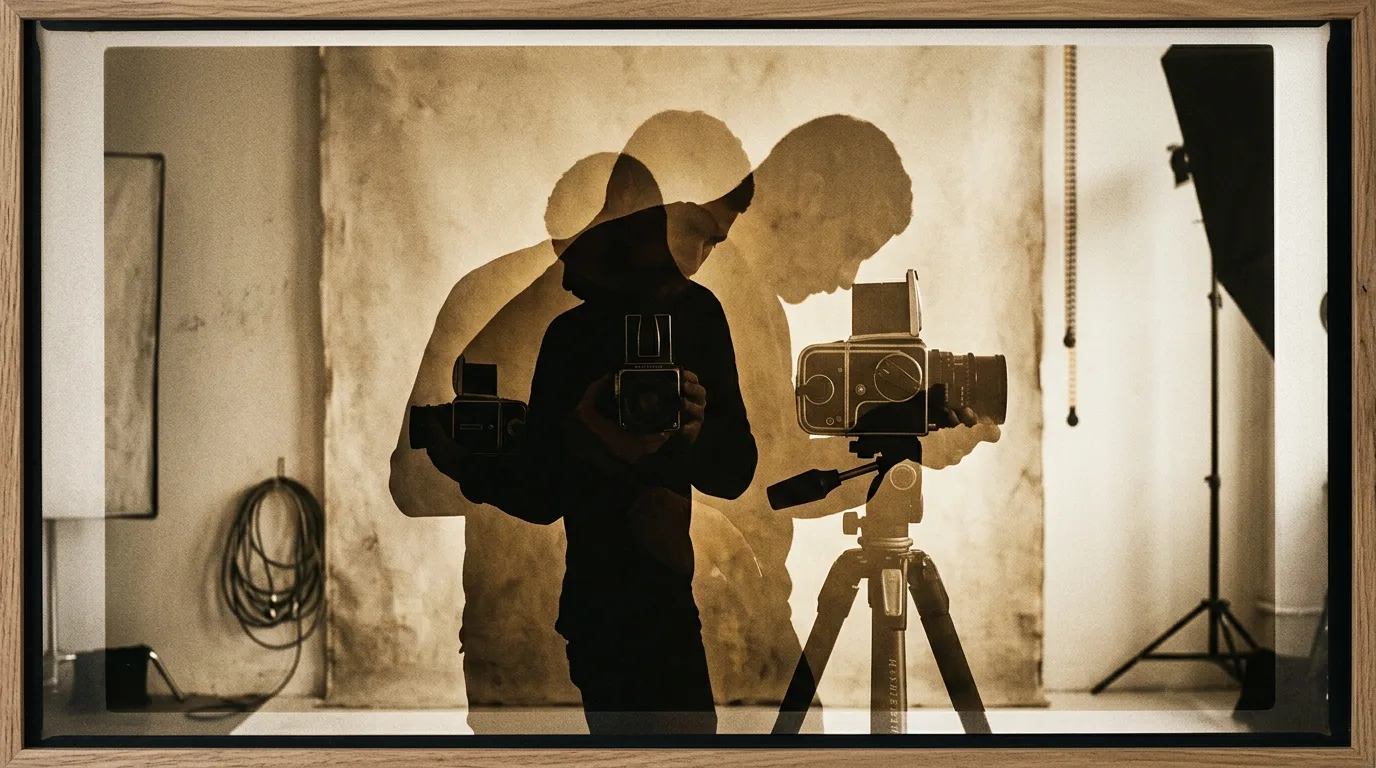
There is a tendency, particularly in the culture surrounding creative careers and portfolio development, to focus on finished works, on the polished object that can be displayed, sold, or cited as evidence of achievement. This tendency is understandable, and it is not without value. But it can obscure the process through which a distinctive artistic identity actually forms: the accumulation of experimental work, the series that pushes an idea past its comfortable resolution, the projects that fail in instructive ways.
Experimental series are the laboratory of serious art practice. They are where an artist discovers not just what they can make, but what they are genuinely interested in making and why. The work that emerges from sustained experimental engagement often looks quite different from what the artist imagined when they began, and that difference is the point.
What Makes a Series Experimental
The word “experimental” is applied freely and not always usefully. In the context of fine art photography and conceptual practice, an experimental series is one in which the outcome is not predetermined, where the artist sets up conditions for discovery rather than executing a preformed plan.
This is a meaningful distinction. A well-crafted series with a defined concept and a clear visual language is not experimental in this sense; it is the result of experimentation that has been brought to resolution. The experimental phase is what precedes that resolution, the period in which the artist is working in genuine uncertainty about what the piece will become.
Experimental work often involves the deliberate introduction of constraints. A constraint (a rule about what the camera position will be, what the color palette can include, what types of subjects will be included or excluded) creates a bounded space within which unexpected things can happen. The constraint is not a limitation on creativity but a generator of it.
Rules as Creative Instruments
“The Rulebook,” as an artistic project, makes explicit something that is implicit in all experimental practice: the work is governed by rules, and the rules themselves are a subject. What rules determine how a photograph is made? What rules govern how images are sequenced? What rules does the viewer bring to the act of looking, and what happens when those rules are violated or confirmed?
Working explicitly with rules as subject matter connects contemporary art practice to a long tradition of conceptual art that foregrounds process and system. Sol LeWitt’s wall drawings, for instance, are defined by instructions that others execute. The work is the instruction set; the installation is its manifestation. This approach shifts attention from the hand of the artist to the logic of the system, and that shift produces work that can be endlessly varied while remaining conceptually coherent.
For the photographer working in a documentary or portraiture tradition, introducing explicit rules into the process can produce a defamiliarizing effect. What seems like a straightforward image becomes strange when the viewer understands that it was made under constraint, such that the range of what the photographer could do was deliberately narrowed, and what appears in the frame is therefore the result of both choice and limitation.
Identity Through Accumulation
An artist’s identity (in the sense of a recognizable sensibility, a set of persistent concerns, a characteristic way of approaching problems) does not emerge fully formed. It develops through the accumulation of work, and particularly through the accumulation of work that takes risks.
The risk in experimental practice is real. A series that genuinely explores uncertain territory will sometimes produce work that does not succeed on its own terms. The artist has to be willing to make that work, to learn from it, and to move forward with the knowledge gained even when the resulting images are not ones they would want to exhibit. This willingness to work through failure is a professional practice, not a personal failing.
Over time, patterns emerge from the accumulation of experiments. The artist begins to notice which problems generate the most productive uncertainty, which formal approaches feel native to their sensibility, which questions they return to across different projects. These patterns are the raw material of artistic identity, not a brand or a style applied from outside, but an identity arrived at through making.
The Role of Platform and Context
The context in which experimental work is presented shapes how it is received and understood. A series developed in the relative privacy of a personal practice and then shared through a digital portfolio reaches audiences in a different register than work developed for a specific gallery context or institutional commission.
Digital platforms extended the reach of experimental practice significantly in the early 2010s. Artists who might previously have shared work only with a local community of peers could now reach audiences internationally, receive feedback across geographic and cultural contexts, and encounter work from other artists that challenged or complicated their own assumptions. Platforms like Behance and Flickr functioned as distributed exhibition spaces as much as social networks.
This access changed the temporality of experimental work. Rather than holding a series in the studio until it reached a definitive resolution, artists could share work in progress, observe responses, and allow those responses to inform the development of the series. The experimental process became, in some cases, a semi-public one.
Series as Self-Portrait
There is a sense in which every series an artist makes is a self-portrait, not necessarily in the sense that the artist appears in the work, but in the sense that the series is a record of a sustained engagement with a problem at a particular moment in the artist’s development. The formal choices, the subjects selected, the quality of attention brought to the work: these are all legible as evidence of who the artist was when the work was made and what they cared about.
This is true of work that appears to have nothing to do with the artist’s biography or inner life. A landscape series is as much a record of the photographer’s way of seeing as a series of explicit self-portraits. The camera is always pointing in two directions at once.
For artists who work across multiple series over years or decades, the body of work as a whole becomes a kind of autobiography, not a linear narrative, but a collection of sustained engagements with questions that were alive for the artist at different points in their practice. The viewer who takes the time to look at the whole body of work encounters not just individual projects but the arc of a developing sensibility.
Moving Forward from Experimentation
The experimental series that generates genuine discovery will eventually reach a point of productive exhaustion, a point at which the central questions have been worked through as far as the current approach can take them, and the artist is ready to move into new territory. Recognizing this moment is itself a skill that develops through practice.
The transition from one series or project to the next is rarely a clean break. Elements of previous work persist in new projects, transformed by the artist’s development but still recognizable to an attentive viewer. The conversation between past and present work is one of the things that gives a mature artistic practice its depth and coherence.
What the experimental series ultimately produces, beyond whatever individual images emerge from it, is an artist who has been changed by the process of making, with more nuanced questions, more developed technical capacities, and a clearer sense of what kind of work is genuinely theirs to make.
See also: Exploring Identity Through Conceptual Photography and Curating a Creative Legacy: Lessons from Early Portfolio Practice.