Exploring Identity Through Conceptual Photography
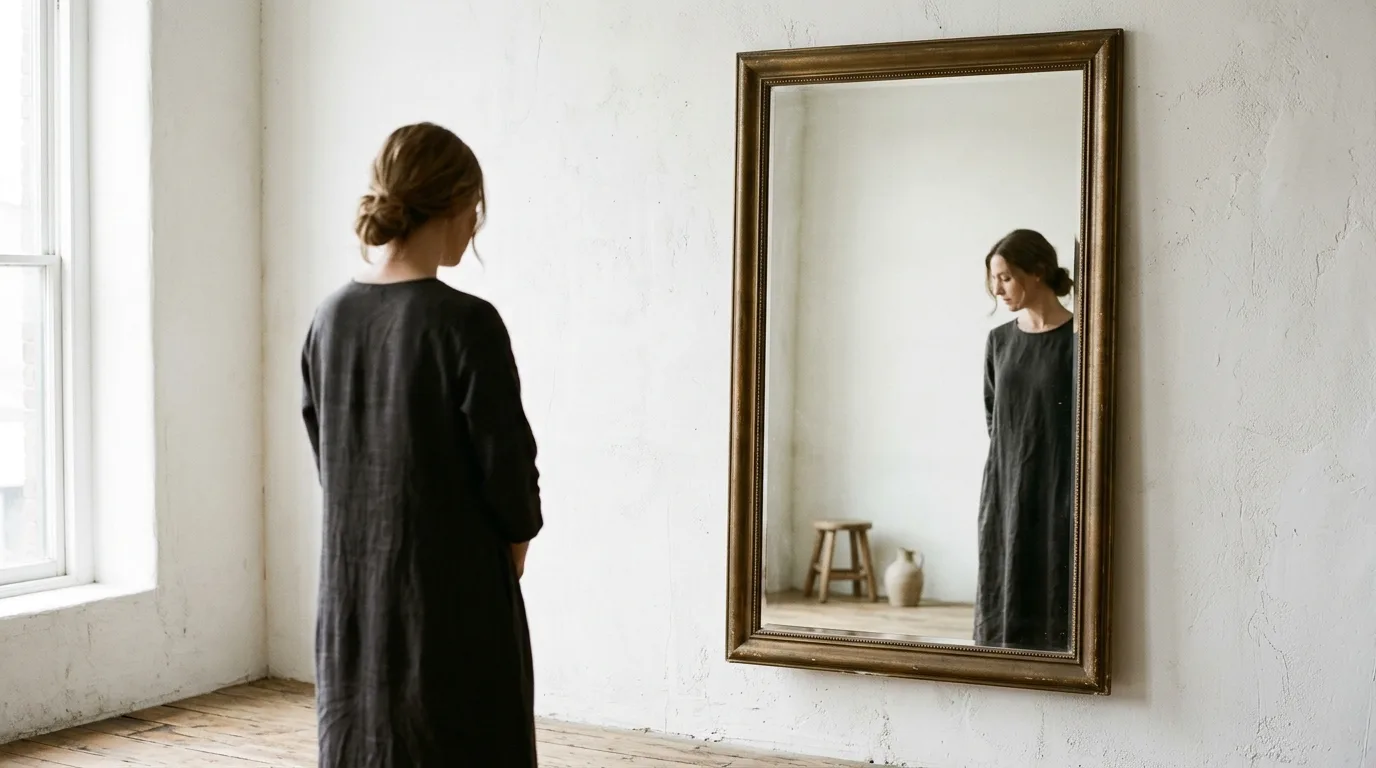
Photography has always carried within it the tension between documentation and invention. A photograph records what was in front of the lens at a given moment, and yet any working photographer or attentive viewer knows that the camera does not capture reality so much as it proposes one. Nowhere is this tension more productively exploited than in conceptual photography, where the image is not an end in itself but a vehicle for an idea, an argument made with light rather than words.
For artists working at the intersection of fine art and photography, questions of identity form a persistent and generative subject. Who is the person in the frame? Who constructed that person? What does the body, the face, the gaze reveal or withhold? These are not new questions, but the photographic medium makes them viscerally present in ways that paint or sculpture can approach only indirectly.
The Portrait as Construction
The portrait tradition carries enormous cultural weight. For centuries, portraiture was the domain of royalty, clergy, and the affluent, images commissioned to project status, legitimacy, and a carefully managed idea of personhood. Photography democratized the portrait but did not dissolve its constructedness. Every portrait is still a negotiation: between subject and photographer, between the moment captured and the narrative implied.
Conceptual portraiture takes this negotiation into explicit territory. Rather than pretending to a transparent window onto the subject, the conceptual photographer foregrounds the frame itself. Props, staging, color, scale, repetition, and sequencing all become legible parts of the work’s argument. The viewer is never allowed to forget that they are looking at a made thing.
Artists working in this mode frequently draw on the body as raw material, not to objectify it, but to question what it means to present a body at all. Clothing, posture, gaze direction, and spatial relationship to the camera carry semantic weight that the artist can load, subvert, or deliberately empty. The result is portraiture that asks the viewer to work, to bring their own interpretive frames into contact with those of the artist.
Series as Method
The single image has enormous power, but conceptual work in photography often demands the series as its primary unit of meaning. A series allows for accumulation, variation, and internal dialogue. The viewer who moves through ten images in a sequence experiences something qualitatively different from what any individual image in that sequence could produce alone.
Seriality introduces the possibility of rule and deviation. An artist might establish a formal constraint (a fixed camera position, a single backdrop color, a set of repeated gestures) and then work within and against that constraint to generate meaning. The constraint itself becomes legible as a statement. In the context of identity, this is particularly resonant: the rules that govern how a self is presented, how it is recognized, how it is legible within social codes, are themselves a subject worth examining.
Projects built around seriality also make visible the passage of time, the mutability of the subject, and the limits of any single representation. A face photographed ten times is not the same face ten times. It is ten distinct proposals about what a face is.
The Interior Made Visible
Some of the most compelling conceptual photography of the last two decades has been preoccupied with the relationship between interior experience and outward appearance. How does the inner life show itself? Can an image render psychological states, memories, or emotional histories visible without collapsing into illustration?
This line of inquiry produces work that resists easy legibility. Rather than illustrating a feeling, the artist creates conditions in which feeling can arise in the viewer, through compositional tension, through the uncanny, through scale relationships that unsettle normal perceptual expectations. The work operates obliquely, trusting the image to carry more than a caption could explain.
The series titled “Inside Out,” associated with Joshua Lake’s early portfolio, exemplifies this approach. The title itself announces the inversion: what is normally interior is brought to the surface, and what appears on the surface is understood to have depths. The photographic image, which can only record surfaces, becomes a site for exploring what lies beneath them.
Eye Maps and the Topology of Seeing
The eye is among the most intensively symbolized organs in Western art. It carries associations with soul, with truth, with surveillance, with vulnerability. In fine art photography, the close-up of the eye or the face becomes a site of concentrated meaning (too much meaning, sometimes) and the artist must work against accumulated symbolism to clear space for a fresh proposition.
The “Eye Maps” project suggests cartography applied to the organ of vision itself. To map the eye is to treat it as terrain rather than as window, as a surface with topography, with zones of particular density or sparseness, with edges and interiors. This inversion of the usual semiotic function of the eye in portraiture is characteristic of conceptual work that approaches familiar subjects from unexpected angles.
Photography’s relationship to vision is inherently reflexive. The camera is an eye, or a prosthetic eye, or an artificial eye depending on the metaphor the artist finds most useful. A project that takes the eye as its explicit subject cannot avoid this reflexivity. The viewer looking at an image of an eye is caught in a loop: seeing, depicted as seeing, seen.
Building a Body of Work
For the artist working across multiple series and projects, the question of coherence arises. What holds a portfolio together when individual projects differ in subject matter, formal approach, and emotional register? In conceptual practice, coherence is often found not in visual consistency but in persistent underlying concerns.
An artist might return again and again to questions of visibility and concealment, or to the relationship between the body and the systems that classify and regulate it, or to the way personal history inscribes itself on material objects. These concerns generate varied visual work while maintaining a recognizable intellectual and ethical orientation.
The portfolio, in this reading, is not a collection of finished objects but an ongoing argument, a body of evidence for the artist’s sustained engagement with particular questions. Each new project is both a response to the previous work and an opening toward what has not yet been addressed.
Conceptual Photography and the Viewer
Conceptual work places demands on viewers that purely aesthetic photography does not. It asks for a willingness to sit with uncertainty, to hold multiple interpretations simultaneously, and to remain curious about what the work is doing rather than immediately categorizing it. This is not a failing of accessibility but a deliberate structure built into the work.
The reward for this kind of sustained looking is significant. Work that initially resists easy interpretation often yields rich returns to the viewer who returns to it. The meaning is not exhausted in a single encounter. It accumulates across viewings, across conversations with other work, across the viewer’s own changing experiences and knowledge.
This is, ultimately, what distinguishes conceptual photography from more immediately legible image-making. Not superiority, but a different relationship to time and to the experience of meaning-making itself. The image proposes; the viewer completes it.
See also: The Role of Experimental Series in Building an Artist’s Identity and Curating a Creative Legacy: Lessons from Early Portfolio Practice.